




Certified Medical Waste Disposal Providers Serving New York City
Every provider in our NYC network holds the credentials that the city’s healthcare facilities, research institutions, and regulated waste generators require. Medical Waste Pros works exclusively with transporters holding active NYSDEC 6 NYCRR Part 364 permits — the mandatory authorization for any transporter carrying RMW off-site in New York State. This is not a preference or a certification: it is a legal requirement. Generators who transfer RMW to unpermitted transporters remain directly and personally liable for the waste under New York’s cradle-to-grave framework, regardless of any agreement with the transporter. Our provider network operates within the ecosystem of NYSDEC’s approximately 100 permitted RMW transporters and delivers waste to NYSDEC-authorized treatment facilities.
New York State and Federal Regulations Governing Medical Waste in NYC
New York State has maintained regulatory oversight of RMW since the early 1980s and has built one of the most comprehensive RMW frameworks in the country. Uniquely, that framework is jointly administered by two state agencies — the NYSDEC and the NYSDOH — each with distinct jurisdictional authority over different generator types. Understanding which agency’s rules apply to your facility, and where those rules overlap, is a prerequisite for genuine compliance in New York City. The table below summarizes the primary regulatory frameworks applicable to NYC medical waste generators, with notes specific to the five-borough operating environment.
| Regulation / Authority | Applies To | NYC-Specific Notes | Why It Matters for Waste Disposal |
| NY Environmental Conservation Law Title 15, Article 27 (6 NYCRR Parts 360, 364, 365) | All RMW generators not under DOH jurisdiction; all off-site transport, storage, and treatment | DEC oversees approximately 100 permitted RMW transporters and 35 transfer/treatment facilities statewide. NYC generators shipping waste off-site must use only DEC Part 364-permitted transporters — no exceptions | Generators bear cradle-to-grave liability. Using an unpermitted transporter exposes your facility directly. All off-site shipments require a signed NY State Medical Waste Tracking Form; copies retained 3 years |
| NY Public Health Law §§ 1389-aa–gg & 10 NYCRR Part 70 | Hospitals, freestanding diagnostic/treatment centers, residential healthcare facilities, and clinical laboratories | DOH has direct jurisdiction over NYC’s major hospital systems — NYC Health + Hospitals, New York-Presbyterian, NYU Langone, Mount Sinai, Northwell. DOH approves alternative treatment technologies and sets on-site waste management standards | Covered facilities must follow DOH-specific RMW handling, storage, and on-site treatment standards in addition to DEC transport requirements. Both agencies must be satisfied for full compliance |
| HIPAA / HITECH | Healthcare providers, health plans, and business associates handling PHI | NYC’s density means PHI frequently appears on prescription bottles, specimen containers, and patient labels across all five boroughs — even in small practices and home health settings. See MWP’s blog: Does HIPAA Apply to Medical Waste? | Documented, secure disposal is a HIPAA compliance obligation wherever PHI is present in the waste stream — not just an environmental one |
| OSHA Bloodborne Pathogen Standard 29 CFR § 1910.1030 | Any employer whose workers have occupational exposure to blood or potentially infectious materials | NYC’s large home health workforce — caring for patients across all five boroughs and generating RMW in residential settings — creates particular OSHA compliance complexity. See MWP’s guide: The OSHA Bloodborne Pathogens Standard Explained | Engineering controls, PPE protocols, and proper sharps container use are mandatory at the point of care — including in-home healthcare settings where supervision is harder to enforce |
| Resource Conservation and Recovery Act (RCRA) | Generators of hazardous pharmaceutical and chemical waste | NYC’s concentration of oncology programs (MSK, NYU Langone, Mount Sinai, New York-Presbyterian) generates P-listed and U-listed hazardous pharmaceutical waste that cannot enter standard RMW streams or the municipal sewer system | Hazardous pharmaceutical waste requires separate RCRA-compliant disposal via incineration. Pharmaceutical waste in NYC must not enter municipal waste streams or sanitary sewers under any circumstances |
| Needlestick Safety and Prevention Act of 2000 | All employers with occupational sharps exposure | NYC’s 50,000+ practicing physicians, dental offices across the five boroughs, and large home health workforce make sharps injury prevention a daily compliance priority at enormous scale | Mandates engineering controls (e.g., safety-engineered sharps devices) and proper sharps container programs that minimize needlestick risk from generation through final disposal |
| Department of Transportation (DOT) Hazardous Materials Regulations 49 CFR Parts 171–180 | All transporters of regulated medical and hazardous waste | Navigating DOT-compliant transport in NYC’s five-borough environment — through tunnels, over bridges, through densely populated neighborhoods — creates logistical compliance complexity not present in suburban or rural markets | All RMW transported in commerce must comply with DOT packaging, labeling, placarding, and documentation requirements. All transporters must carry their DEC Part 364 permit and current waste tracking documents in-vehicle |
New York City Shredding Company Network Statistics
Commercial vs Residential Shredding in New York City
Average Local Shredding Order Size
Businesses/large organizations and high-volume residential customers are matched to New York City-area shredding companies with the required certifications and service offerings.
| Shredding Customer | Average # of Boxes |
|---|---|
| Business and Government | 1 |
| Residential and Home Office | 1.33 |
| Small Volume Drop-Off | 1.07 |
| Local Shredding Drop-Off Sites | 12 |
Most Popular Industries Served
| Healthcare Systems |
| Tattoo Shops |
| Property Management Companies |
New York City’s Medical Waste Landscape: Volume, Complexity, and Urban Density
The scale at which NYC’s major health systems generate regulated medical waste (RMW) is difficult to overstate. Beyond the major health systems, New York City’s medical waste generators span an extraordinary range of facility types operating at compressed density. More than 50,000 physicians practice in the NYC metro area. Under New York’s broad RMW definition, everything from dental offices and veterinary practices to independent clinical laboratories and dialysis centers all generate regulated waste. This also includes research universities (including Columbia, NYU, Rockefeller University, and CUNY graduate programs), funeral homes, tattoo studios, home health agencies, pharmacies, and correctional health facilities. The city’s long-term care facilities and nursing homes — concentrated in neighborhoods like Washington Heights, the South Bronx, and Staten Island — generate sharps, pharmaceutical, and biohazardous waste at volumes shaped by the city’s aging population and its far-above-average use of home health services. Medical Waste Pros connects each of these generator types with NYC-area providers whose service programs are built around the logistical realities of operating across five boroughs.
Our Most Commonly Requested Medical Waste Disposal Services in New York City
Our network of NYSDEC Part 364-permitted providers can handle virtually any medical waste disposal need across all five boroughs. For a full breakdown of requirements by facility type, see our guide to disposing of medical waste: the industry-by-industry breakdown. Here are the most commonly requested services in our New York City network:
Regulated Medical Waste and Biohazardous Waste Disposal for NYC Healthcare Facilities
Regulated medical waste (RMW) in New York — also called biohazardous waste or red bag waste — encompasses waste generated in the diagnosis, treatment, and immunization of humans or animals that may contain infectious agents: blood-soaked materials, surgical waste, cultures and stocks of infectious agents, pathological waste, and contaminated patient care materials. For the complete breakdown of which waste categories fall under New York’s RMW definition, see our article on regulated medical waste categories and examples. Our NYC medical waste disposal providers offer scheduled pickup programs calibrated to each facility’s generation volume and physical constraints — an important consideration in a city where storage space is scarce and containers must not accumulate. Every pickup includes a signed New York State Medical Waste Tracking Form, and a Certificate of Destruction confirms final treatment.
Pharmaceutical Waste Disposal and Medication Disposal for NYC Facilities
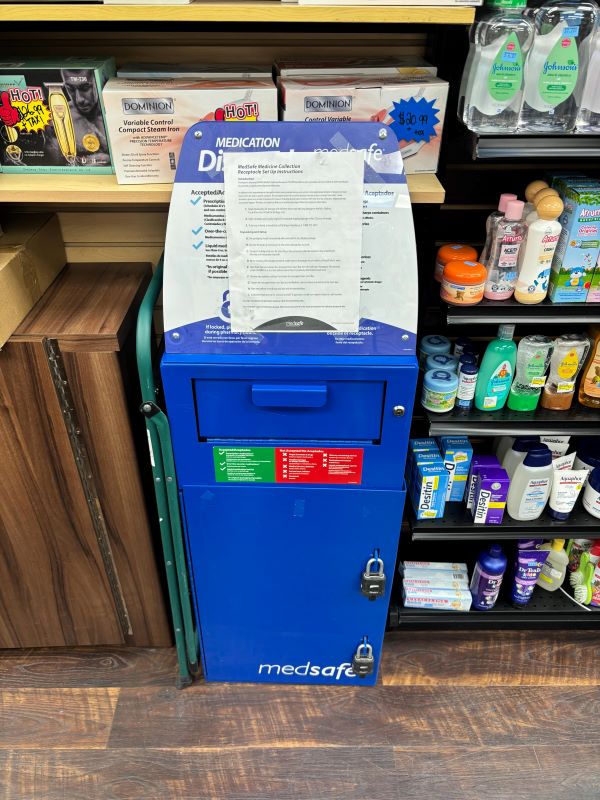
Pharmaceutical waste management in New York City is shaped by a critical rule that applies across all boroughs: pharmaceutical waste may not be disposed of in sanitary sewers, septic systems, or regular trash. Moreover, pharmaceutical waste that cannot be separated from regulated medical waste (RMW) at the point of generation must be labeled “incinerate only” on the secondary container and transported only to authorized incineration facilities. This rule reflects both state-level requirements and the Environmental Protection Agency’s (EPA) longstanding guidance under the Resource Conservation and Recovery Act (RCRA), which governs hazardous pharmaceutical waste (P-listed and U-listed chemicals including certain highly toxic medications and chemotherapy agents). For a detailed breakdown of which medications fall under RCRA’s hazardous classification, see our article on hazardous pharmaceutical waste as defined by RCRA. Our NYC pharmaceutical waste disposal services include pharmaceutical waste containers, scheduled pickup programs, controlled substance disposal, staff segregation guidance, and pill bottle recycling programs for facilities looking to reduce their overall waste footprint.
Chemotherapy Waste Disposal for NYC Oncology Programs and Cancer Centers
New York City’s oncology infrastructure is arguably the most concentrated in the world. Trace chemotherapy waste cannot be mixed with standard regulated medical waste (RMW), must be labeled and containerized separately, and must be transported under the Department of Transportation’s (DOT) hazardous materials protocols to authorized incineration facilities. Our NYC chemotherapy waste disposal services match oncology programs of every scale — from major cancer center campuses to satellite infusion suites in Midtown or Park Slope — with New York State Department of Environmental Conservation (NYSDEC)-permitted providers certified for chemotherapy waste transport and treatment.
Medical Waste Disposal for NYC Funeral Homes and Mortuaries
New York City’s funeral home industry is a regulated medical waste (RMW) generator category that is frequently overlooked in compliance planning. Under New York State’s broad RMW definition, funeral homes and mortuaries that prepare human remains generate regulated waste including blood and body fluids removed during embalming, pathological materials, and sharps used in preparation procedures. Medical Waste Pros connects NYC’s funeral homes with New York State Department of Environmental Conservation (NYSDEC) Part 364-permitted local providers who understand the specific waste streams generated during body preparation, provide correctly sized and labeled containers for sharps and biohazardous materials, offer scheduled pickup programs calibrated to each funeral home’s service volume, and supply the New York State Medical Waste Tracking Forms required for every off-site shipment. For a comprehensive overview of how disposal requirements vary across facility types see our guide to disposing of medical waste: the industry-by-industry breakdown.
New York City’s combination of world-class academic medicine, the nation’s largest public hospital system, a dual-agency regulatory framework unlike any other in the country, extraordinary generator density across five urban boroughs, and a residential home health population that creates RMW obligations in apartment buildings across the metro makes it the most structurally complex medical waste market in the United States. Medical Waste Pros makes it straightforward to find a certified, NYSDEC Part 364-permitted local provider who understands New York State’s joint DEC/DOH oversight structure, federal OSHA and RCRA obligations, and the specific waste streams and logistical constraints of operating across New York City. For tips on building a more efficient program for your facility, see our guide to optimizing your medical waste disposal program. Contact us today for same-day competitive quotes from vetted NYC medical waste disposal providers serving all five boroughs and the tri-state area.