


Different Types of Medical Waste and How to Dispose Them
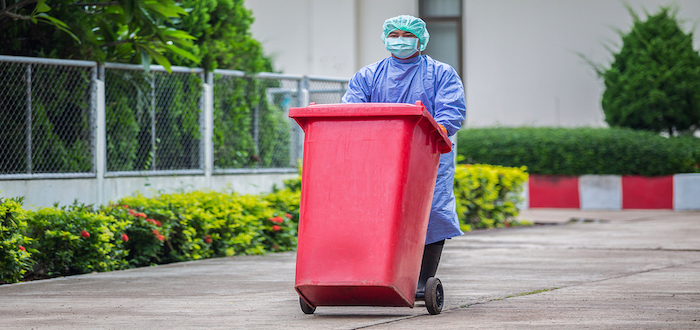
There are countless types of medical waste in healthcare, many of which are required to be collected, treated, and disposed of differently. These different types of medical waste are separated into four categories: infectious, hazardous, radioactive, and general waste.
As a medical waste generator, it’s essential to understand the difference between them and how to handle each type. Read on to learn more.
What Is Medical Waste?
The Environmental Protection Agency (EPA) defines medical waste as any healthcare waste that might be contaminated by blood, body fluids, or other potentially infectious materials (OPIMs). Because that definition’s a bit general, the EPA takes further steps in its medical waste guidelines to define and categorize medical waste into four separate groups: infectious, hazardous, radioactive, and general medical waste.
The Different Types of Medical Waste
Infectious Waste
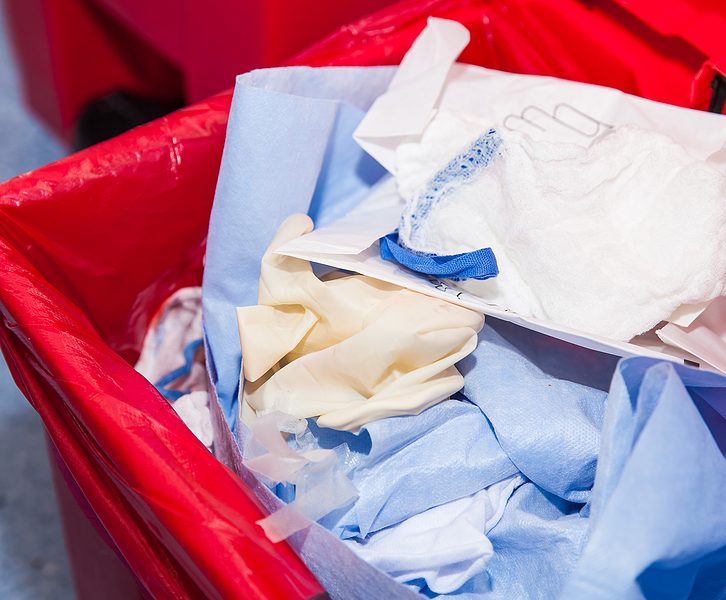
Infectious waste is any type of waste that poses a risk of infection to humans or animals. Although infectious waste comes in many forms, some of the most common include:
- Blood, blood products, and bodily fluids
- Blood-soaked bandages
- Human/animal body parts and tissue
- Blood cultures
- Swabs used to inoculate cultures
- Stocks
- Surgical waste (discarded gloves, etc.)
Hazardous Waste
Hazardous waste is a non-infectious waste but still has the potential to affect humans. To be considered hazardous the waste must also meet the federal guidelines from the Resource Conservation and Recovery Act (RCRA) for what is and isn’t hazardous waste. Common types of hazardous waste include:
- Chemicals (medical and industrial)
- Chemotherapy agents
- Hazardous medications
- Sharps
Sharps Waste
Although technically they fall into the hazardous waste category, sharps are often treated as a separate waste type because they need to be collected and disposed of separately from other medical wastes. Common sharps types include:
- Needles
- Syringes
- Lancets
- Scalpels
- Razors
- Ampules
- Broken glass
Radioactive Waste
As the name implies, radioactive waste is any waste containing radioactive materials. Besides just waste generated from nuclear medicine treatments though, other common radioactive waste generators and types include:
- Cancer Therapies
- Brachytherapy treatments
- Radiotherapy liquid
- Lab research liquids
- Medical equipment using radioactive isotopes
- Contaminated glassware and supplies
- Fluorine-18 (F-18)
- Technetium-99 (T-99m)
- Iodine-131 (I-131)
- Strontium-89 (Sr-89)
- Iridium-192 (Ir-192)
- Cobalt-60 (Co-60)
General Medical Waste
General medical waste is similar to other non-hazardous office or household waste, and makes up the majority of waste produced in healthcare. Although they’re not always the first things considered, general waste includes the patient’s protected health information (PHI) and medical records. How these and other general medical waste are disposed is tightly regulated by HIPAA, making compliant disposal crucial.
How to Dispose of Different Types of Medical Waste
There are multiple methods of medical waste disposal. Each type of medical waste requires different treatment, so a great first step is separating each type you have. For each type, there is a special container that should be used:
- Infectious waste requires red containers and bags
- Hazardous waste requires black containers
- Sharps waste requires puncture-resistant containers with biohazard symbols
- Radioactive waste requires shielded containers with radioactive symbol
- General medical waste requires shredding and trash bins
Once you’ve got all the different types of waste separated and in the appropriate containers, it’s time for disposal. There are a number of different ways to treat medical waste:
- Incineration: typically used for pathological and pharmaceutical waste, but never for plastics
- Autoclaving: typically used for infectious waste, sharps, and other hazardous wastes
- Microwaving: typically used as an alternative to autoclaving for treating infectious waste, sharps, and other hazardous wastes
- Chemical: typically used for chemical and liquid waste, like laboratory cleaning waste
- Biological: typically an experimental and rarely-used method for treating hazardous and infectious organisms
Compliant Medical Waste With Medical Waste Pros
Do you need disposal for your doctor’s office or dental practice? Do you have leftover personal medications to dispose of? If you’ve got multiple types of medical waste to dispose of, Medical Waste Pros makes the process easy. We have a nationwide network of disposal professionals who provide compliant, reliable medical waste disposal at your budget and on your schedule. From biohazardous waste and used sharps to pill bottle recycling and chemotherapy waste, our disposal services ensure safety and compliance from start to finish.
For free quotes on medical waste disposal services, simply fill out the form or just give us a call at 888-755-6370 today.